

In 2027, most Bali private jet carbon offset options 2027 charge around 1–3% of your charter price, typically USD 200–900 per Bali leg as of August 2026 for light to heavy jets. Travellers can opt into verified projects (VCS, Gold Standard, CDM) that match or exceed calculated Bali private jet emissions per passenger.
How do Bali private jet carbon offset programs actually neutralise my 2027 flight?
Bali private jet carbon offset programs for 2027 start by estimating your flight’s fuel burn and CO₂‑equivalent output using route, aircraft type and passenger load. A light jet Singapore–Bali might emit roughly 0.5–1.0 tonne CO₂e per passenger, while a heavy jet Hong Kong–Bali segment can reach 1.5–3.0 tonnes per passenger as of August 2026, depending on occupancy and routing.
To balance this, brokers and operators purchase carbon credits from audited climate projects. In 2027, the most credible schemes remain Gold Standard, Verified Carbon Standard (VCS) and select UN Clean Development Mechanism (CDM) projects. These cover renewable energy, improved cookstoves, peatland restoration and verified reforestation in Southeast Asia and beyond.
Each credit typically represents one tonne of CO₂e avoided or removed. The project registry permanently “retires” the credits against your flight, so they cannot be sold again. Serious providers issue a certificate or registry link so you can verify serial numbers and volumes against your itinerary for carbon neutral private jet flights to Bali.
What will Bali private jet carbon offset options 2027 cost for typical routes?
As of August 2026, carbon offset costs for private jets into DPS are usually a small percentage of charter spend. A light jet Jakarta–Bali sector, often in the USD 10,000–15,000 per leg charter band, may require USD 150–400 in offsets, depending on the project price per tonne (commonly USD 8–25/tCO₂e).
Midsize or super‑midsize aircraft from Singapore, Perth or Hong Kong, typically in the USD 15,000–30,000 per leg range as of August 2026, may need USD 250–700 of offsets per direction. Ultra‑long‑range or heavy jets arriving from the Middle East or Europe can demand USD 600–1,500 per leg, reflecting higher fuel burn and distance.
Travellers using Bali jet card membership options or fractional solutions referenced in industry discussions on fractional jet ownership Indonesia 2027 trends increasingly pre‑build carbon credits into hourly rates. This allows every occupied sector to be automatically neutralised without ad‑hoc calculations at booking.
How are lifestyle extras like catering and celebrations linked to offsetting my Bali jet?
Many 2027 clients want premium comforts without increasing environmental guilt. Menu planning for Bali private jet catering options now often includes a sustainability line, where extra emissions from food transport, chilled storage and onboard preparation are added to the main fuel‑based calculation and offset together in one figure.
High‑end touches such as a curated wine and champagne list for Bali jets or custom celebration cakes on Bali private jets can be supported by responsible sourcing policies: regional suppliers where possible, reduced single‑use plastic, and waste‑minimum dessert designs. The remaining footprint is then expressed in CO₂e and neutralised through vetted credits.
Operators may present a combined “experience ledger” showing aircraft fuel, catering logistics and ground transfers. This gives a single carbon number per trip so guests celebrating anniversaries, proposals or business closings in Bali can enjoy their onboard service knowing the entire door‑to‑door experience has been addressed.
Do airport limits in Bali influence emissions and offset decisions?
Infrastructure at DPS matters for both safety and sustainability. The main runway length for heavy jets at Bali (Denpasar, WADD/DPS) is about 3,000 metres, which comfortably accepts most large‑cabin and ultra‑long‑range business jets, plus select VIP airliners, under standard conditions as of August 2026.
However, aircraft still face operational constraints. Weight limits for private jets at DPS—driven by runway performance, temperature and obstacle considerations—can require payload management. In practice, this means adjusting passenger numbers, luggage or fuel load, which in turn affects fuel‑stop planning and total Bali private jet emissions per passenger across a multi‑leg trip.
Bali curfew times for private jets are another factor. While DPS operates long hours, certain night‑time or slot‑restricted periods can push operators into sub‑optimal routings or holding times. Extra track miles or delays increase fuel burn slightly. Thorough trip planning therefore includes both performance charts and slot availability, then reflects any additional emissions in the final offset volume.
How does Bali compare to Phuket or the Maldives for eco‑minded private jet travellers?
Travellers often cross‑shop destinations, comparing Bali to regional peers. In terms of demand, Bali compared to Phuket for private jets currently shows stronger year‑round charter traffic, with more intra‑Asia leisure and business itineraries that can be bundled into multi‑sector offset plans spanning Singapore, Jakarta and Perth.
By contrast, Bali compared to Maldives for private jets typically involves shorter feeder legs from Asian hubs rather than the many ultra‑long‑range flights that the Maldives receives from Europe and the Middle East. This can mean lower per‑trip emissions on average, though total annual footprint still depends on frequency of visits.
Destination marketing teams and content creators are responding. There is a clear rise in YouTube vlogs about private jets to Bali that mention offsets, sustainable villas and local community projects. Some channels even use affiliate marketing for Bali private jets, promoting brokers that transparently integrate carbon programs alongside luxury itinerary design.
What should I check before paying for carbon neutral private jet flights to Bali?
By 2027, serious travellers expect documentation. Reputable intermediaries for private jet charter Bali should detail the methodology used to calculate emissions, the registry and project name for the offsets, and the exact tonne volume used. Avoid vague “green fee” surcharges with no traceable backing.
Check that the project is not double‑counted and that it is additional (the activity would not have happened without credit funding). Ask whether the credits are avoidance‑based (e.g., renewable energy replacing coal) or removal‑based (e.g., long‑term forestry or engineered carbon removal), as this affects long‑term impact.
Some Bali private jet loyalty programs now offer tier benefits tied to positive impact, such as automatically doubling offsets on milestone flights or funding local reef restoration. Users of Bali luxury travel trends 2027 private jet visitors style itineraries increasingly request consolidated sustainability reporting for corporate ESG disclosure or family office impact dashboards.
- Typical DPS runway length used by private jets: about 3,000 m, suitable for most heavy jets and select VIP airliners as of August 2026.
- Indicative charter cost Jakarta–Bali: roughly USD 10,000–40,000 per leg depending on jet size and date, as of August 2026.
- Common offset price bands: around USD 8–25 per tonne CO₂e for quality Gold Standard or VCS projects as of August 2026.
- Estimated emissions: 0.5–3.0 tonnes CO₂e per passenger per Bali leg, depending on distance, aircraft and load factor.
- Offset surcharge share: usually 1–3% of total charter invoice for a fully neutralised Bali sector in 2027.
- Documentation: clients can request a certificate or registry link matching credits to specific flight dates and sectors.
- Lead time: offsets can be arranged at booking or retro‑actively within days after flight completion, subject to registry availability.
Frequently asked questions
how much does Bali private jet carbon offset options 2027 cost in Bali?
As of August 2026, Bali private jet carbon offset options 2027 usually add around USD 200–900 per leg for most light to heavy jets into DPS. The exact amount depends on distance, aircraft type, load factor and which certified project you choose, with premium nature‑based or removal credits priced at the upper end.
is Bali private jet carbon offset options 2027 worth it in Bali?
For most travellers chartering into Bali, the additional 1–3% cost for offsets is modest relative to the overall charter budget and can meaningfully reduce the net climate impact of the trip. Offsetting also supports documented renewable energy, reforestation or community projects that align with responsible luxury travel expectations in 2027.
what is included in Bali private jet carbon offset options 2027?
Typical Bali private jet carbon offset options 2027 cover fuel‑burn emissions for each sector, and in some cases extra footprint from catering logistics and ground transfers. Inclusions often feature calculation reports, purchase and retirement of certified credits, plus a digital certificate or statement suitable for ESG reporting or personal records.
Do Bali jet card or loyalty schemes automatically offset my flights?
Many Bali jet card membership options and Bali private jet loyalty programs are moving toward automatic offsets for every occupied hour from 2027 onward. Some packages build a fixed CO₂e rate per hour into pricing, while others offer opt‑in tiers that double offsets on milestone trips or for specific eco‑themed itineraries.
Is tipping etiquette on Bali private jets affected by choosing green options?
Tipping etiquette on Bali private jets remains independent of sustainability choices. Gratuities for crew and ground staff continue to be discretionary, often reflecting service quality, complex itineraries or special requests. Opting to offset your emissions is handled separately through your broker or operator and does not replace or obligate any cash tip.
To discuss tailored offsets, aircraft options and even opportunistic Bali private jet empty leg flights, contact the BD desk at Juara Holding Group via WhatsApp 6281139414563 or email bd@juaraholding.com.
Last updated 4 August 2026
More from the desk
Uncategorized
Planning A 2027 Bali Corporate Retreat By Jet
Corporate retreats in Bali 2027 by private jet typically cost from USD 10,000–40,000 per leg for 6–14 executives, as of…

Uncategorized
Sydney–Bali Private Jet Route Outlook For 2027
On the Sydney to Bali private jet corridor, 2027 is likely to see 3–6 charter departures on peak days, dominated…
Uncategorized
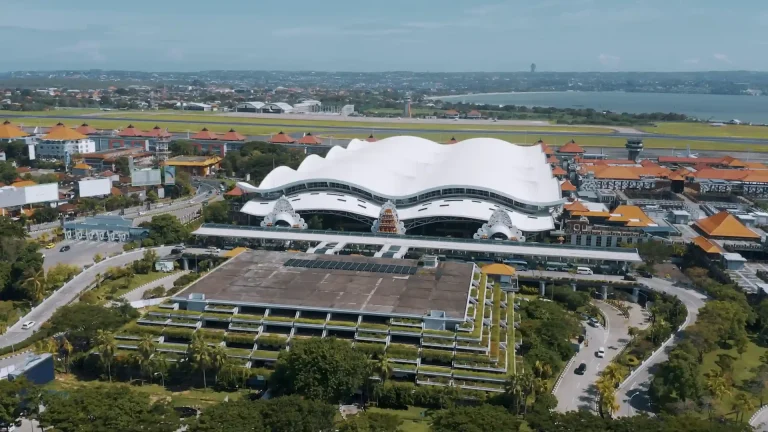
Will Bali’s Private Jet Terminal Change By 2027?
Ngurah Rai’s Bali private jet terminal is slated for at least one dedicated VIP/FBO expansion phase before 2027, with upgraded…
Reading About A Route You Plan To Fly?
Guides carry bands. A quote carries a number — route, date and passenger count are all it takes to start one.